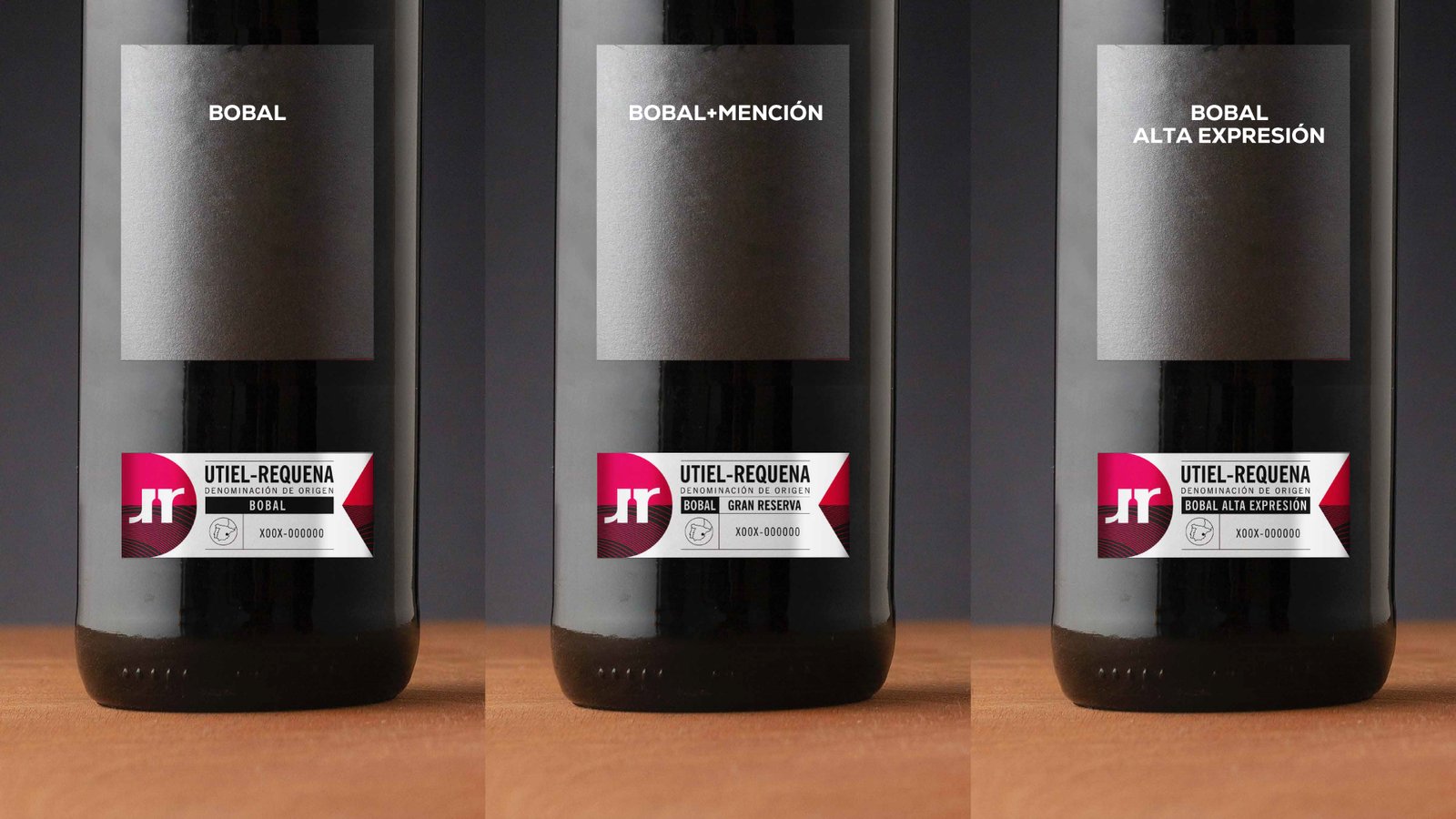




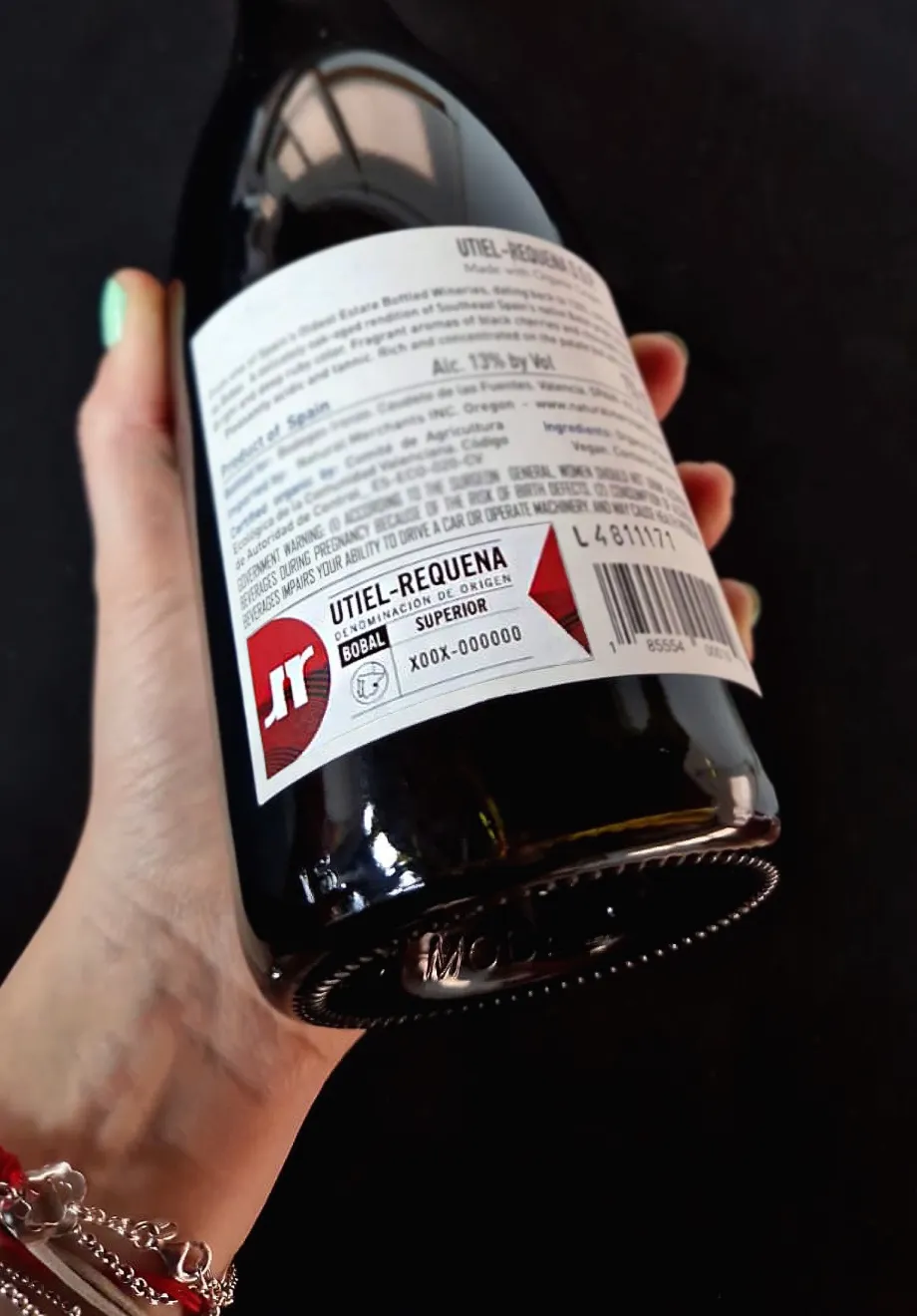
To know if a wine belongs to DO Utiel-Requena, you should look at the back of the bottle and find this strip (back label).
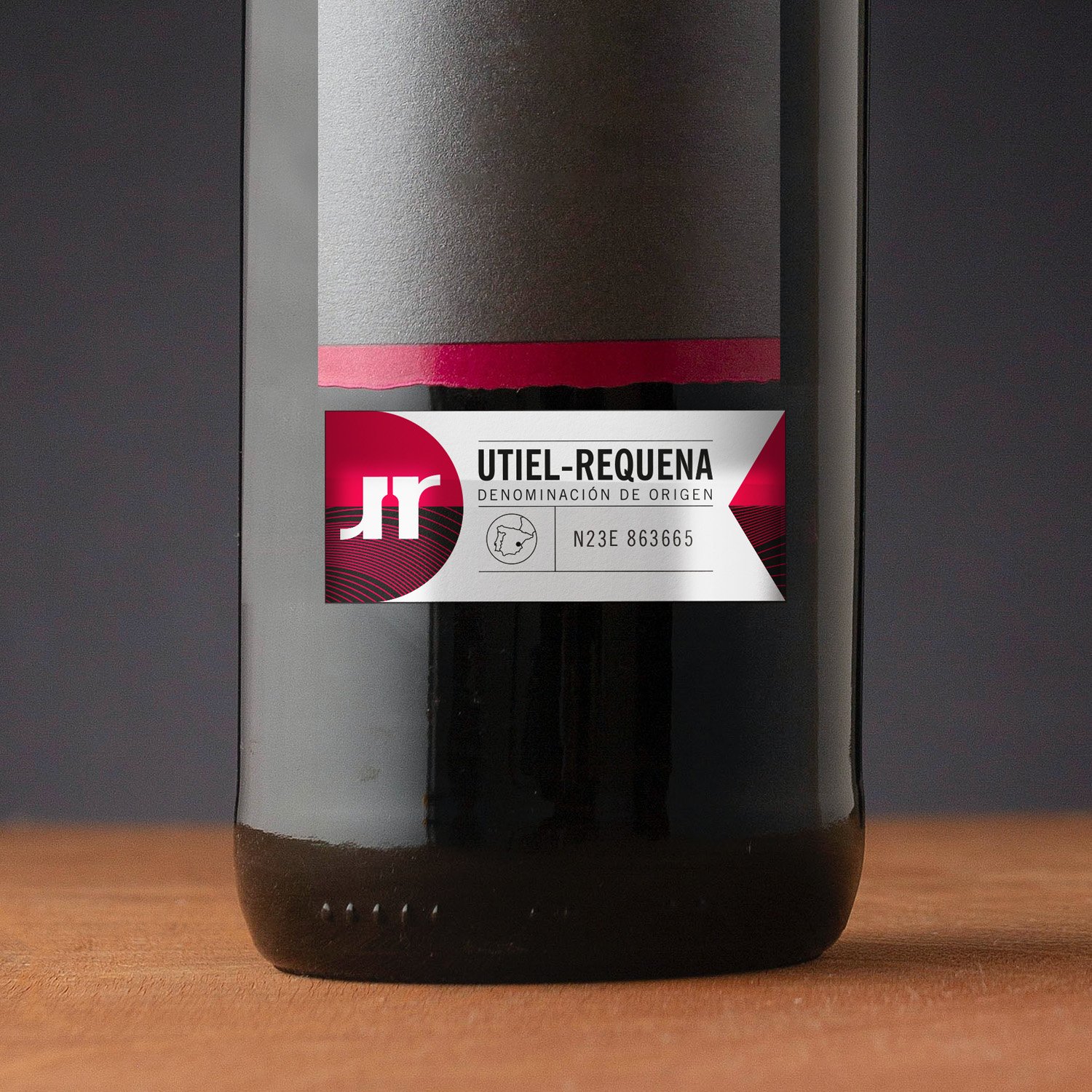
Recently, we have renewed its design, aiming to modernise the image of the DO, internationalise the brand and associate the wine glass with the DO Utiel-Requena brand in consumers’ minds.
Now, the design includes three main elements:
On the left: a DO, for Denomination of Origin, which also resembles the bowl of a wine glass and a vineyard landscape. The lines of the letter D connect with the “sea” of vineyards that forms our wine-growing heritage.
In the centre: the brand and the quality seal, the designation, a map and the control numbering.
On the right: a triangle that imitates the base of the glass; together, the entire back label forms a horizontal wine glass.
Learn more about them in our back label guide:

Mentions are voluntary indications that provide information about the wine’s production process and ageing. Our wines may include the following mentions, explained below.
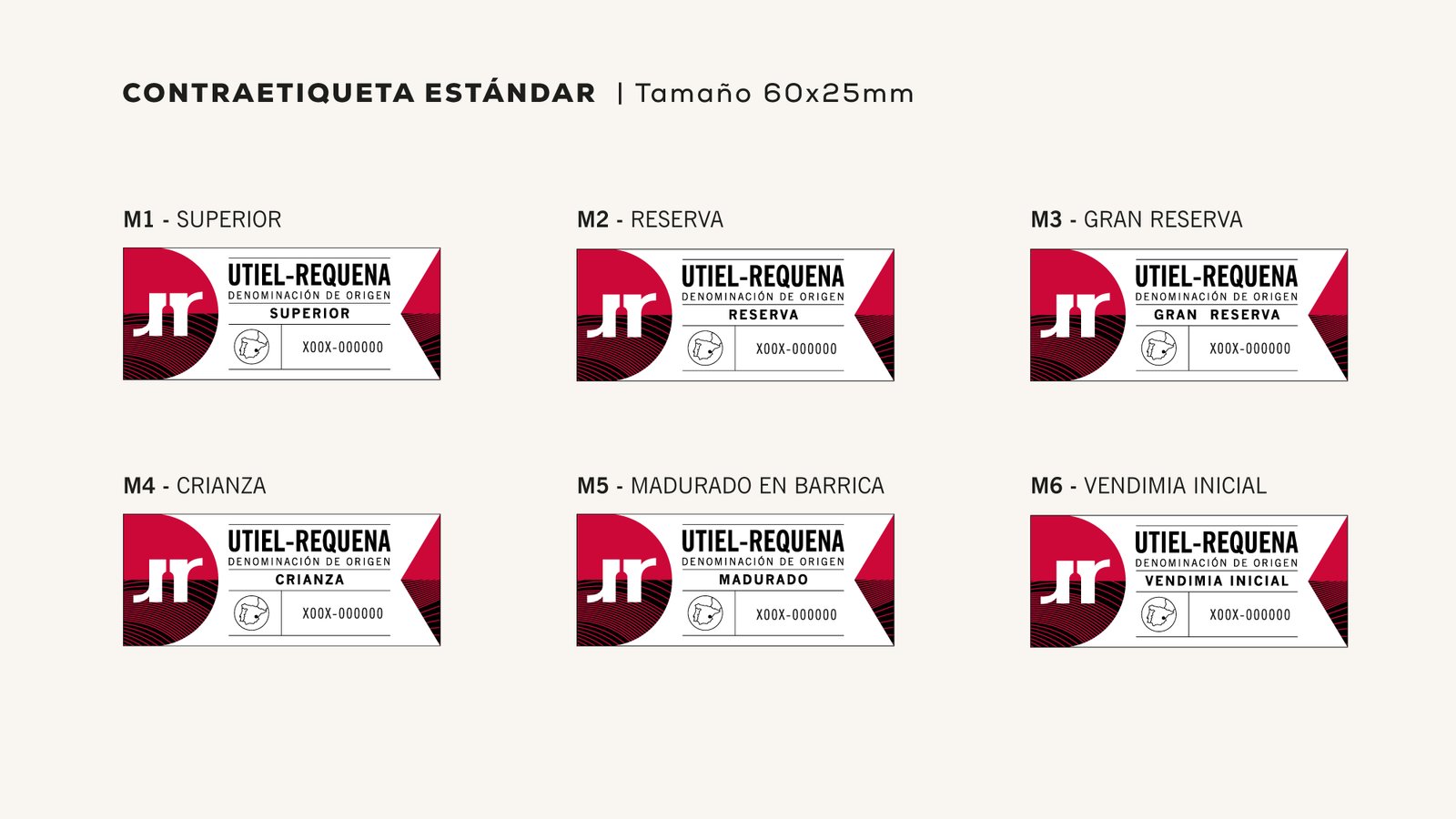
White, rosé and red wines made from grapes harvested during the first ten days of harvest, preserving their essential attributes, including a slight release of carbon dioxide.
White, rosé or red wines made from at least 85% of preferred varieties, with or without oak ageing, that possess outstanding organoleptic qualities, such as greater aromatic intensity or persistence on the palate.
For red or white wines that have undergone ageing in oak barrels or casks with a maximum capacity of 600 litres for a period not exceeding 6 months, sufficient to modify their aromatic and taste characteristics and make the oak influence noticeable.
In white and rosé wines: minimum 18 months of ageing, of which at least 6 months must be in oak barrels of a maximum of 330 litres.
In red wines: minimum 24 months of ageing, of which at least 6 months must be in oak barrels of a maximum of 330 litres.
In white and rosé wines: minimum 24 months of ageing, of which at least 6 months must be in oak barrels of a maximum of 330 litres and the remainder in bottle.
In red wines: minimum 36 months of ageing, of which at least 12 months must be in oak barrels of a maximum of 330 litres and the remainder in bottle.
In white and rosé wines: minimum 48 months of ageing, of which at least 6 months must be in oak barrels of a maximum of 330 litres and the remainder in bottle.
In red wines: minimum 60 months of ageing, of which at least 18 months must be in oak barrels of a maximum of 330 litres and the remainder in bottle.
For single-varietal Bobal rosé and red wines. They may appear simply as Bobal or with a specific mention, as explained above.
For single-varietal Bobal wines, with or without ageing, that guarantee maximum expression of the territory. For this mention:
The vineyards must be over 50 years old and yield less than 4,000 kg/ha (29.60 hl/ha), and may not be irrigated without prior authorisation from the Regulatory Council.
Viticultural practices must contribute to the safeguarding of ecological balance and respect for the environment. All agricultural practices must be recorded in a vineyard logbook.
The winery must have separate facilities for the production of these wines from the rest, clearly declaring their origin. The label will indicate the number of bottles obtained from the batch of wine certified under this mention.